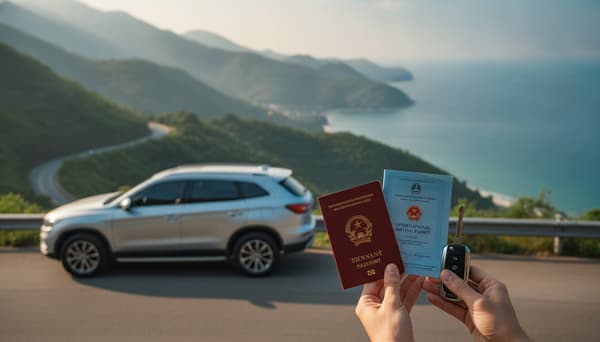

Driving in Vietnam is different — here's what you need to know
Vietnam's traffic rules on paper are similar to most countries: drive on the right, stop at red lights, wear seatbelts. In practice, the execution is notably different due to motorbike density (80% of vehicles), informal right-of-way conventions, and enforcement priorities. These are the 12 rules that actually matter for foreigners behind the wheel in 2026.
1. Speed limits by road type (strictly enforced)
Vietnam's 2020 decree 100 standardized speed limits and dramatically increased fines. Current limits (2026):
- Urban/residential: 50 km/h for cars, 40 km/h in school zones
- Provincial roads (QL): 80 km/h for cars, 60 km/h through villages
- Expressways (CT): 100-120 km/h depending on signage
Fines for speeding: VND 800,000 - 5,000,000 plus potential license suspension. Camera enforcement on major highways is consistent — automatic fines reach the rental company within 2-4 weeks.
2. Alcohol zero tolerance — no exceptions
Since 2020, Vietnam enforces 0.00% blood alcohol for drivers. Any detectable alcohol triggers fines from VND 6 million to 40 million plus 23-month license suspension. No legal minimum — if you had a beer 3 hours ago, you're over the limit. Police conduct breath tests at random stops, especially evenings and weekends.
3. Right-of-way: size and speed, not signs
Vietnamese right-of-way is informal. The practical rule: bigger vehicles and higher speeds assert priority. Trucks don't brake for cars; cars don't brake for motorbikes. At intersections, your turn is what you can safely take, not what a sign or light grants you. Defensive driving matters more than "being right."
4. Motorbike density — 1-meter buffer rule
Vietnamese cities have 80-90% motorbikes on the road. They flow like water — filling every gap, passing on both sides. Maintain at least 1 meter of buffer space on each side when possible. Use mirrors continuously. Do not open doors in traffic without checking for motorbikes.
5. Mandatory helmet for all passengers
Helmet law applies to motorbike riders AND passengers (including infants over 6 months). As a car driver, you don't need one — but if you rent a motorbike as part of your trip, all passengers must wear helmets. Fines: VND 200,000 - 300,000 per unhelmeted passenger.
6. Seatbelts mandatory — front and back
All car passengers must wear seatbelts. Fine for non-compliance: VND 800,000 - 1,000,000 per unbelted passenger. Children under 10 and/or under 135cm must be in an appropriate child seat.
7. Phone use while driving — strict enforcement
Using a mobile phone in hand while driving is fined VND 1-2 million. Hands-free via Bluetooth is OK. Navigation via phone is legal if mounted to a dashboard holder.
8. Headlights: mandatory dusk-to-dawn and in rain
Headlights (low beams, dipped) must be on from 30 minutes before sunset to 30 minutes after sunrise, plus during rain and reduced visibility. Fine: VND 800,000 - 1,000,000. Fog lights can be used in addition during reduced visibility (under 50m).
9. Lane discipline on expressways
Expressways enforce lane discipline: slowest vehicles on right, overtaking on left, no weaving. Camera enforcement checks for lane violations and speeding simultaneously. Staying in the right lane when not overtaking is the default.
10. Bus lanes (BRT) — car entry is illegal
Hanoi has dedicated Bus Rapid Transit (BRT) lanes on Le Van Luong / Giang Vo. Entering them during restricted hours as a car earns an automatic camera fine of VND 4-6 million. Signs are clearly marked in Vietnamese; when in doubt, stay out of bus-only lanes.
11. Parking: only where permitted
Street parking is legal only in designated areas (look for blue "P" signs or staffed parking attendants). Wrong-parking fines are VND 800,000 - 2,000,000 and your vehicle may be towed. Hotel parking typically requires pre-booking.
12. Running a red light — VND 4-6 million
Running a red light costs VND 4-6 million plus license suspension, with camera enforcement active at major intersections. Even yellow-light "rush through" can trigger automatic camera fines. Stop when the light turns yellow, always.
What to do if you're stopped
Be calm and cooperative. Provide your passport, home license, and rental contract. Most checks are documentary. If a fine is issued, pay it and keep the receipt. If the officer requests a bribe (unusual with foreign drivers but not unheard of), politely decline and request an official receipt — this usually resolves the situation.
Bottom line
Vietnamese traffic law is strict on paper and increasingly enforced through automatic cameras. The biggest real-world risks are: speeding on expressways (automatic fines), alcohol zero-tolerance (breath tests at checkpoints), and motorbike right-of-way misunderstanding. Drive defensively, keep your documents, and assume cameras are watching on every highway.