
A modern rental agreement is not the universal "golden ticket" many travelers believe it to be. If you skip the fine print on insurance and vehicle condition, a signed contract is effectively a piece of paper with no protection when something goes wrong. This single misunderstanding can void your coverage and turn a dream road trip into a legal nightmare.
It's understandable to feel overwhelmed by the legendary chaos of local traffic or the complex fine print of rental contracts. You want the freedom of the open road without the anxiety of hidden fees or mechanical safety risks. Finding a safe car rental vietnam for foreigners requires more than just a quick search. It demands a strategy built on radical transparency and legal precision.
This 2026 guide provides the clarity you need. You'll master the latest regulations under Circular 108/2026/TT-BCA, learn to spot vehicle maintenance red flags, and understand how to navigate insurance loopholes. We outline everything from license conversion costs of ₫135,000 to the benefits of professional drivers, ensuring your journey is defined by peace of mind and total compliance.
Key Takeaways
- Confirm your rental contract's insurance terms and vehicle condition report in writing before you accept the keys.
- Identify a safe car rental vietnam for foreigners by prioritizing modern vehicle fleets and guaranteed 24/7 nationwide roadside assistance.
- Protect your budget from common industry scams by insisting on radical transparency and contracts that include CDW insurance with no hidden fees.
- Master the unwritten rules of the road, focusing on predictable traffic flow and giving way to larger vehicles in the local hierarchy.
- Consider the ultimate safety upgrade of an English-speaking driver to eliminate personal legal liability and navigate chaotic urban environments with ease.
Table of Contents
Preparing Your Documents for a Foreign Driver
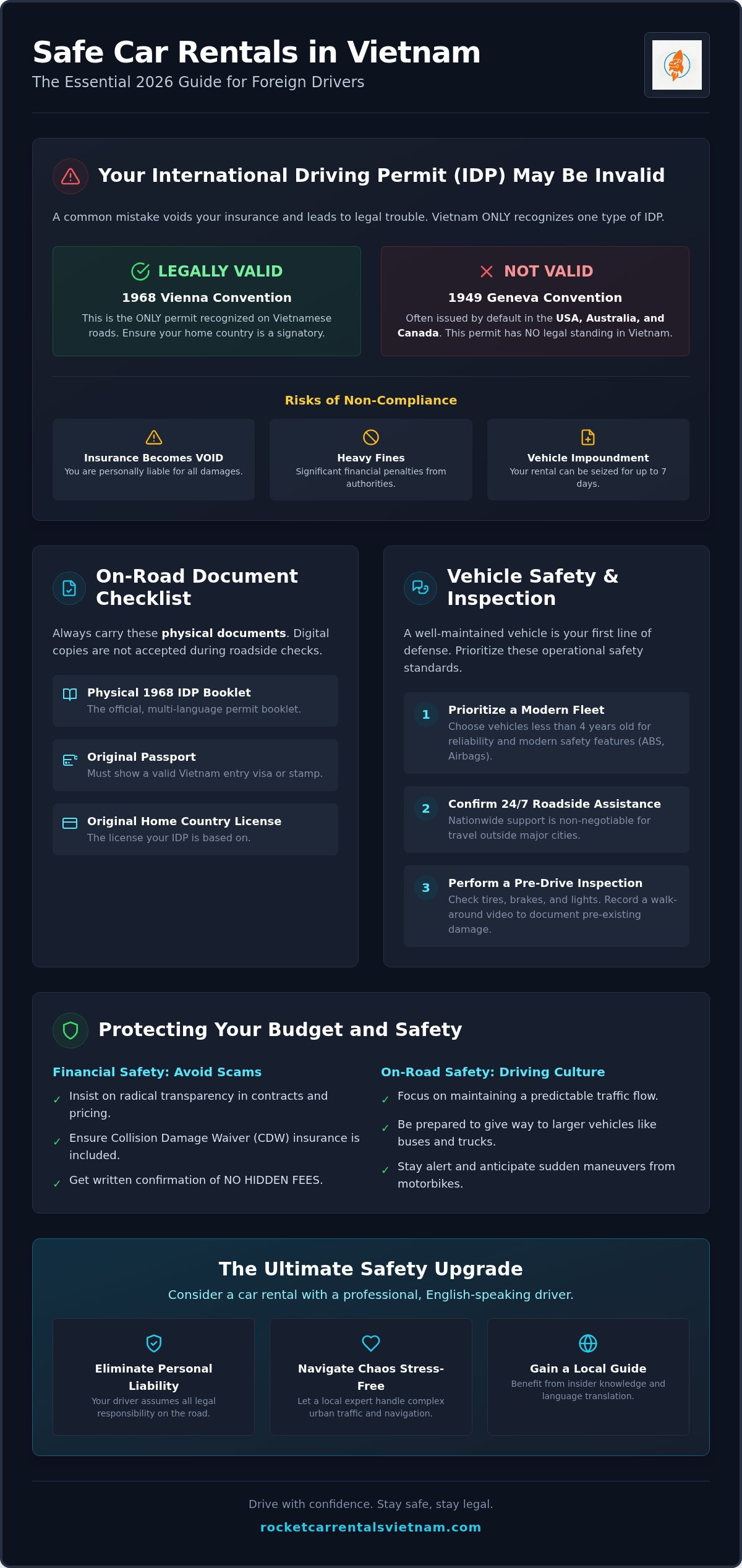
Arriving without the correct paperwork isn't just a minor oversight. It's a booking delay that can eat into your first day on the road. Many travelers rely on outdated forum advice about what a rental desk will accept. To secure a safe car rental vietnam for foreigners, you must align with the agency's 2026 documentation standards. If you don't, you risk more than an awkward wait at the counter; you risk your entire financial safety net if the paperwork gap surfaces later during a claim.
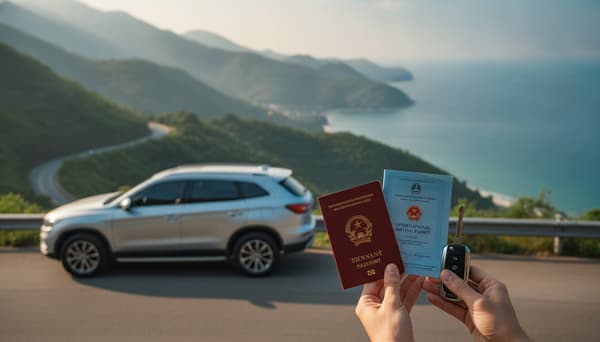
Every reputable agency asks for the same core set: a valid passport with an active visa or entry stamp, a driving license (or a confirmed professional-driver booking if you'd rather not drive yourself), and a payment method for the security deposit. If you plan to drive yourself for a stay longer than 90 days, Circular 108/2026/TT-BCA allows long-term residents with a Temporary Residence Card to convert their license locally; the official government fee for this conversion is ₫135,000 for in-person applications. Short-term visitors are almost always better served by booking a professional driver instead of chasing a conversion that a tourist visa doesn't qualify for.
The risks of arriving unprepared are real. A missing document at pickup can mean a delayed handover or a smaller vehicle selection once the agency reshuffles its fleet around you. More importantly, your Collision Damage Waiver (CDW) insurance is only as good as the contract behind it. Understanding the complex transport and road infrastructure in Vietnam is difficult enough without the added weight of paperwork surprises. Radical transparency starts with knowing exactly what the agency needs from you before you land.
The Pickup Checklist: What You Need to Carry
Carrying the right documents ensures a frictionless handover at the counter. You must have physical originals on your person; digital scans or photos on your phone are rarely accepted for the final check. To remain fully compliant, your documentation package must be complete and matching the name on your booking.
- Valid Passport: Must show a current, active visa or entry stamp.
- Driving License or Driver Booking: Your original home-country license if self-driving, or your confirmed chauffeur-service booking reference if you're not.
- Payment Method: A card or cash for the refundable security deposit, matched to the name on your passport.
Insurance Validity and Contract Compliance
Insurance providers in Vietnam are methodical. They require proof that the rental agreement itself was entered into correctly before honoring any claim. If your license, deposit, or contract details don't match what's on file, your insurance coverage can be delayed or denied at the worst possible moment. Read the CDW terms before you sign, confirm what excess or deductible applies, and keep a photo of the signed contract on your phone as a backup. Ultimately, a clean, matching paperwork trail alongside your valid license is the surest path to a smooth, fully insured rental in Vietnam in 2026.
Operational Safety: Evaluating Vehicle Integrity and Maintenance
A vehicle's mechanical health is your first line of defense. Vietnam's tropical climate is brutal on machinery. High humidity and intense heat can degrade rubber seals and brake lines faster than in temperate zones. Because of this, fleet age is a primary indicator of a safe car rental vietnam for foreigners. You should prioritize vehicles that are less than four years old. Modern cars come equipped with essential safety features like Anti-lock Braking Systems (ABS) and multiple airbags. They also feature updated GPS units, which are vital for navigating rural provinces where mobile signals might flicker. Rocket Car Rentals operates a modern, rigorously maintained fleet to ensure national reliability for every traveler.
The Pre-Drive Inspection Protocol
Don't just take the keys and drive away. Checking tire tread depth and pressure is non-negotiable before leaving the lot. Tropical rains can turn asphalt into a skating rink; you need maximum grip. Test the brake responsiveness and ensure the headlights are clear rather than yellowed by sun damage. Always document the vehicle's condition with a detailed walk-around video. This provides an objective record, protecting you from potential "scam" claims regarding pre-existing scratches or dents. It's a simple step that reinforces radical transparency between you and the provider. It also sets a professional tone for the entire rental period, establishing clear expectations from the start.
Maintenance Standards and Support
Breakdowns in remote areas are a reality of long-distance travel, especially when navigating steep mountain passes. Professional, regular servicing is the only way to minimize this risk. Before signing your contract, confirm the company provides 24/7 roadside assistance nationwide. If a warning light appears on your dashboard while crossing the Hai Van Pass, you need immediate expert support. Local garages may lack the parts or expertise for modern rental models. Relying on official government travel advice helps you prepare for local road conditions, but a dedicated support network is what keeps you moving. You want a provider that offers a replacement vehicle if repairs take too long. For a journey backed by a professional safety net, consider the self-drive car rental options available through a trusted local partner. This remains the most reliable foundation for a safe car rental vietnam for foreigners.
Financial Safety: Identifying and Avoiding Rental Scams
Financial security is just as vital as mechanical integrity. A safe car rental vietnam for foreigners isn't found by hunting for the lowest price; it's found through the clearest contract. Radical transparency eliminates the anxiety of the "tourist tax" by ensuring every fee is accounted for upfront. When pricing is open and honest, it acts as a safety feature, protecting you from the stress of unexpected negotiations at the end of your trip. You deserve a stable foundation for your journey, free from the high-pressure tactics that plague the lower end of the travel market.
The "bait and switch" remains a common tactic in major tourist hubs. An agency might advertise a premium SUV online but present a high-mileage economy car upon your arrival. They often claim the original vehicle is suddenly in the shop. To avoid this, only book with providers that offer real-time fleet availability and digital confirmations. Clear, written contracts in English are non-negotiable. If a provider cannot produce a legible, professional agreement, walk away. A contract you can't read is a contract you can't legally enforce.
Red Flags in Local Car Hire
Stay alert for vague insurance terms that exclude "common" accident types. Some local shops claim to offer full coverage but bury clauses that void the policy for minor scrapes or tire damage. This leaves you vulnerable to inflated repair bills. Other red flags include:
- Cash-Only Pressure: If a provider refuses digital payments or insists on cash without a formal digital receipt, you have no paper trail for your deposit.
- Unusually Low Rates: Rates that seem too good to be true are often subsidized by mandatory "cleaning fees" or "mileage surcharges" added during the return process.
- Vague Damage Logs: If the provider seems uninterested in documenting existing scratches, they may be planning to bill you for them later.
Transparent Pricing Framework
A legitimate pricing model should be all-inclusive. Your quote must clearly account for VAT, basic maintenance, and comprehensive Collision Damage Waiver (CDW) insurance. This allows you to plan your budget with confidence. Modern platforms now offer the ability to complete an online booking in under 60 seconds with fixed pricing, removing the need for awkward price haggling.
Understanding the security deposit process is equally important. Most reputable agencies require a hold on a credit card rather than a cash deposit. This hold should have a defined refund timeline, typically between 15 to 30 days. This duration allows the provider to verify that no traffic fines were incurred during your rental period. When you prioritize a provider that values your time and autonomy, you ensure a frictionless experience from the first click to the final return.
On-Road Safety: Navigating the Vietnamese Driving Culture
Driving in Vietnam is an exercise in fluid dynamics rather than rigid lane discipline. To secure a safe car rental vietnam for foreigners, you must understand that predictability is your greatest asset. While Western driving relies on strict adherence to painted lines, the local rhythm is about collective movement. If you drive too defensively or stop unexpectedly, you become a hazard. Instead, maintain a steady pace and allow the "swarm" of motorbikes to flow around you like water around a stone. This mindset shift is essential for anyone behind the wheel in Vietnam's bustling urban centers.
The hierarchy of the road is a fundamental unwritten rule. Size determines right of way. Buses, trucks, and large SUVs expect smaller vehicles to yield regardless of official signage. If a long-distance bus pulls into your lane, decelerate and give way. This isn't a matter of legality; it's a matter of physical safety. Additionally, avoid rural roads after dark. Street lighting is often non-existent, and hazards like unlit agricultural vehicles or wandering livestock are common. Planning your journey to arrive before sunset is a hallmark of a professional, well-organized traveler.
Essential Local Traffic Rules
Vietnam enforces a strict zero-tolerance policy for alcohol. Even a single beer can lead to immediate license suspension and heavy fines. Do not risk it. Unlike many other countries, turning right on a red light is generally illegal unless a specific green arrow or sign explicitly permits it. Many foreigners make this mistake and are quickly stopped by local authorities. Speed enforcement is equally precise. Traffic police frequently use "speed traps" in small towns. Exceeding the limit by as little as 5km/h is enough to trigger a fine, so use your cruise control or monitor your speedometer closely in transit zones.
Communication on the Road
In the West, a horn is an expression of frustration. In Vietnam, it's a vital location signal. Drivers use short, sharp honks to say, "I am here," or "I am overtaking you." It's a proactive safety measure, not an insult. You should also learn to interpret the hand signals of motorbike riders. A rider might point toward the ground or wave their hand to indicate an upcoming pothole or a sudden turn. Using GPS apps like Google Maps is effective for national navigation, but always cross-reference the suggested route with local road conditions. For those who find this environment too demanding, choosing a car rental with English-speaking driver allows you to enjoy the landscape while a local expert manages the complexities of the road. This remains the gold standard for a safe car rental vietnam for foreigners who value total peace of mind.
The Ultimate Safety Upgrade: Car Rental with a Professional Driver
Autonomy is a luxury, but in the complex environment of Vietnamese roads, peace of mind is the ultimate premium. While mastering the local documentation requirements is vital for self-drivers, many travelers find the risk profile of local traffic too high. Choosing a car rental with English-speaking driver is more than a convenience. It's a strategic safety decision. By placing a local expert behind the wheel, you instantly eliminate the legal and physical stresses discussed in previous sections. This is the most secure foundation for a safe car rental vietnam for foreigners who want to experience the country without the burden of liability.
When you hire a professional, the legal responsibility for the vehicle and its operation shifts entirely to the driver and the agency. You don't need to worry about license conversions, local traffic fines, or navigating the "unwritten rules" of the motorbike swarm. Rocket Car Rentals maintains this standard by rigorously vetting every chauffeur. Our team undergoes defensive driving certifications and regular performance audits. We prioritize "quiet professionals" who act as dependable partners, ensuring your journey is seamless and secure. They possess the "Local Expert" advantage, identifying safe routes and avoiding congestion that GPS apps often fail to predict.
Comparing Self-Drive vs. Chauffeur Service
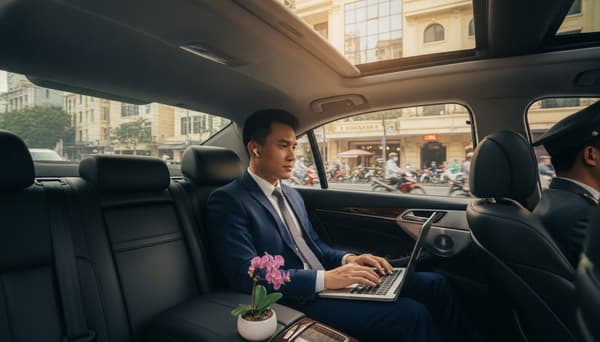
The choice between self-driving and a chauffeur service often comes down to your specific travel goals. For business travelers and families, the cost-benefit analysis is clear. A driver allows you to convert transit time into productive work hours or quality family interaction. You focus on the limestone karsts of Ninh Binh or the coastal beauty of Da Nang instead of the brake lights in front of you. The convenience of door-to-door service, including seamless airport transfers, removes the friction of navigating unfamiliar urban centers. It's an investment in your mental energy, ensuring you arrive at your destination refreshed rather than exhausted by the road.
Professional Standards for Drivers
A true premium service is defined by communication. Language proficiency is a non-negotiable standard for our fleet. An English-speaking driver doesn't just navigate; they bridge the gap between you and the local environment. They can coordinate with hotels, handle roadside interactions, and provide real-time updates on your itinerary. For those planning multi-day national trips, booking a dedicated driver is straightforward. It provides a consistent safety net across provincial borders. This level of curated care is what makes a safe car rental vietnam for foreigners truly effective. You gain the freedom of a road trip with the security of an institutional partner working diligently behind the scenes.
Secure Your Vietnamese Journey
Success on the road starts with legal precision and radical transparency. By prioritizing complete, matching paperwork and insisting on modern, well-maintained fleets, you eliminate the most common risks facing international travelers. Whether you choose the independence of a self-drive vehicle or the sophisticated security of a professional chauffeur, your foundation must be built on integrity. Finding a safe car rental vietnam for foreigners is no longer a matter of chance; it's a matter of choosing a dependable local expert who values your autonomy.
Rocket Car Rentals provides the stable foundation you need for a stress-free expedition. Every rental includes comprehensive CDW insurance and 24/7 national support to ensure you're never stranded. If the urban traffic feels too demanding, our English-speaking professional drivers are ready to take the wheel and manage the logistics for you. You can book your safe, transparent car rental in under a minute and focus on the incredible landscapes ahead. Vietnam is a country of breathtaking beauty and vibrant culture. With the right partner, the road is yours to discover with total peace of mind.
Frequently Asked Questions
What documents do I need to rent a car in Vietnam as a foreigner?
You'll need a valid passport with an active visa or entry stamp, your original driving license, and a payment method for the security deposit. If you'd rather not drive yourself, a confirmed professional-driver booking replaces the license requirement entirely. This distinction is the most critical factor for a safe car rental vietnam for foreigners, as mismatched paperwork can delay your insurance coverage.
What happens if I get into a car accident as a foreigner in Vietnam?
Contact your rental provider and the local police immediately to document the scene. If you're driving legally with a valid license, your Collision Damage Waiver (CDW) should cover the costs. However, being unlicensed means you're personally liable for all damages and medical expenses. Local authorities may also impound the vehicle for up to seven days while they investigate the incident.
Do I need specific car insurance for renting a vehicle in Vietnam?
You should prioritize rentals that include comprehensive Collision Damage Waiver (CDW) insurance. This is a standard safety feature that limits your financial exposure in case of damage. Always review the policy to ensure it doesn't exclude common road hazards or minor scrapes. Radical transparency in insurance terms is a hallmark of a professional rental service, providing the peace of mind you need for a national road trip.
Can I rent a car in Vietnam without a local driving license?
Yes, you can rent a car self-drive using your original home-country license. If you're an expat with a Temporary Residence Card or a visa longer than 90 days, you can also convert your home license to a local one. The official government fee for this process is ₫135,000 for in-person applications. A standard tourist e-visa doesn't provide enough duration to qualify for this license conversion.
Why do many people recommend hiring a driver instead of self-driving?
A professional driver removes the burden of legal liability and the exhaustion of navigating unpredictable traffic. Local chauffeurs are experts at managing the "flow" of motorbikes and the hierarchy of larger vehicles. This is often the best safe car rental vietnam for foreigners because it allows you to enjoy the scenery while a trained professional handles the risks. It's an investment in your safety and your time.
Are there hidden fees I should look out for when booking a car?
Common hidden costs include mandatory cleaning fees, fuel surcharges, and mileage limits that aren't disclosed in the initial quote. Always insist on a written contract in English that clearly lists VAT and insurance inclusions. You should also confirm the security deposit refund timeline. Reputable agencies typically hold these funds for 15 to 30 days to verify that no traffic camera fines were issued during your rental period.
Is it safe to drive between major cities at night?
We recommend avoiding rural and intercity driving after dark. Many roads lack adequate street lighting, and you may encounter unlit obstacles like broken-down trucks or livestock. Visibility is significantly reduced, making it difficult to spot potholes or sudden changes in road surface. To maintain a high safety standard, plan your travel segments to conclude before sunset, ensuring you always have clear sightlines of the road ahead.
What should I check on the vehicle before I accept the keys?
Walk the car with the agency staff and photograph every panel, the tires, and the fuel gauge before you sign the handover sheet. Test the air conditioning, lights, and horn on the spot. Confirm the spare tire and jack are present. A written, signed condition report at pickup is your strongest protection against a disputed damage claim at drop-off.