
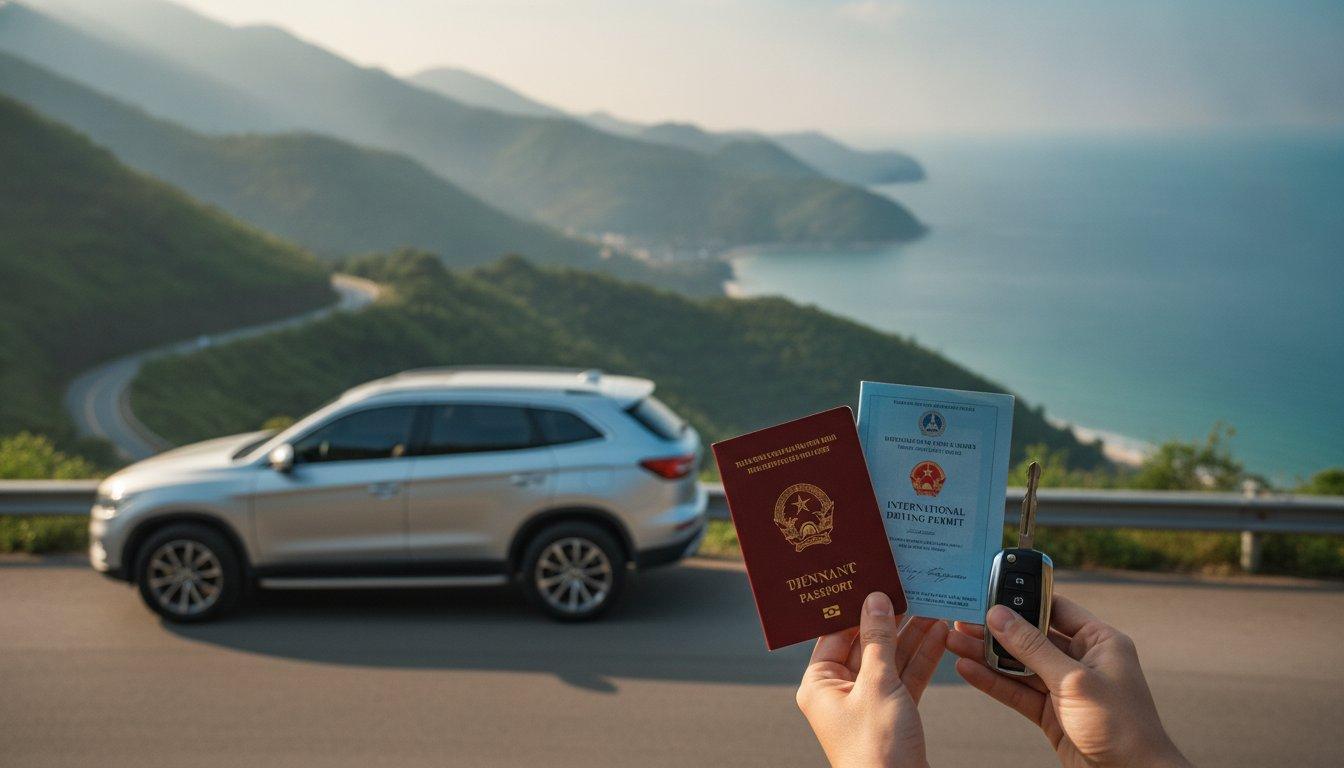
Booking a car in a country you've never driven in is a leap of faith. You want the autonomy of your own vehicle, yet the fear of an unclear contract, a surprise fee at drop-off, or an unmaintained fleet is enough to stall any itinerary. We know that comparing vehicle classes and insurance terms across a dozen listings feels like unnecessary homework. However, under the pricing pressure and mixed-quality market that defines car rental in Vietnam in 2026, these details determine whether your trip stays on budget or turns into a dispute at the return counter.
This guide ensures your car rental in vietnam experience is fully transparent and seamless from the first click to the final handover. You will receive a clear framework for choosing the right vehicle class, a checklist of what to prepare before you book, and a sophisticated look at how Collision Damage Waiver (CDW) insurance actually protects you. We prioritize radical transparency to help you navigate deposit terms and fuel policy with total confidence. We will move from high-level vehicle selection down to the practical steps of pickup and drop-off, providing a stable foundation for your entire journey.
Whether you're weighing a compact hatchback for Hoi An's old quarter or a 7-seater SUV for a family loop through Ninh Binh, the principle stays the same: know exactly what you're paying for before you commit. From understanding daily rate structures to choosing between self-drive and a professional English-speaking chauffeur, this is your practical roadmap for a stress-free rental in Vietnam.
Key Takeaways
- Match your vehicle class to your itinerary — compact cars for cities, SUVs for rural and mountain routes, vans for groups.
- Prepare the essential document checklist, including your passport and driving license or driver-service booking, before you book online.
- Insist on comprehensive CDW insurance and a written, no-hidden-fees quote that itemizes fuel, tolls, and taxes.
- Photograph the vehicle condition together with agency staff at handover to protect your security deposit.
- Evaluate the chauffeur alternative as a premium, stress-free solution for travelers who'd rather not navigate local traffic themselves.
Choosing the Right Vehicle Class for Your Trip
The right vehicle is the one that matches your itinerary, not the one with the flashiest listing photo. A car rental vietnam search typically returns three broad classes: compact city cars, mid-size sedans, and SUVs or vans built for rural and mountain routes. Choosing incorrectly is the single most common source of traveler regret — either you're wrestling a full-size SUV through Hanoi's Old Quarter, or you're bottoming out a compact sedan on a rutted road to Ha Giang.
Start with your route, not your budget. If your trip stays within a single metro area — Ho Chi Minh City, Da Nang, or Hanoi — a compact or subcompact hatchback is almost always the right call. These vehicles are easier to park, sip less fuel in stop-start traffic, and are simple to maneuver through narrow lanes. If your plan includes provincial roads, mountain passes, or unpaved stretches near national parks, prioritize ground clearance and a more powerful engine over cabin luxury.
City Compacts vs. Rural SUVs
Compact cars are the practical choice for urban exploration and short coastal hops. They typically offer the lowest daily rates and the best fuel economy, and most agencies keep a deep bench of them in stock, which means better availability during peak season. The trade-off is limited luggage space and a rougher ride on unpaved roads.
SUVs earn their premium on routes like the Hai Van Pass, the Central Highlands, or the loop around Ha Giang, where road surfaces are inconsistent and elevation changes are steep. The extra ground clearance and torque make a meaningful difference in comfort and safety. If you're unsure which category your route falls into, describe your planned stops to the booking team — a good agency will steer you toward the class that fits rather than the one with the highest margin.
Family and Group Vehicles
For families or small groups traveling together, 7-seater SUVs are the gold standard. These vehicles provide the necessary ground clearance for rural roads and ample space for luggage, car seats, and stroller gear. In island destinations like Phu Quoc, daily rates for 7-seat models typically range from 900,000 ₫ to 1,700,000 ₫ depending on the specific model and season, while a 4-seat compact in the same market often starts around 700,000 ₫.
Larger groups or corporate teams moving between provinces should look at 16-seat vans, usually paired with a professional driver rather than self-drive, given the added complexity of maneuvering a larger vehicle through dense urban traffic. Whatever the size, confirm the exact model and trim in writing — "SUV" can mean very different things across agencies, and a mismatch discovered at pickup is a frustrating way to start a trip.
How Online Booking Works: From Search to Confirmation
The transition from browsing listings to holding a confirmed reservation should be seamless. We've designed our systems to respect your time and intelligence. A car rental vietnam can be secured through our platform in under a minute, allowing for rapid deployment across our national network. This efficiency is backed by a 24/7 support team ready to assist with any booking or pickup queries. Whether you're coordinating a pickup in Da Nang or need assistance planning a rural itinerary in the north, we remain your dependable partner throughout the journey.
Booking shouldn't be a source of anxiety. We provide a grounded, transparent framework for every reservation. You'll receive an instant confirmation that details every aspect of your agreement — a clear breakdown of costs, insurance parameters, and pickup instructions. Total autonomy on the road starts with a stable and predictable booking experience off it.
Step-by-Step Booking Process
Efficiency defines our approach to logistics. You don't need to navigate complex paperwork or wait for manual approvals. Our streamlined process places the reader at the center of the narrative:
- Select Your Service: Choose your vehicle class and decide between self-drive or a professional chauffeur.
- Submit Documentation: Provide digital copies of your passport and your driving license, or your driver-service booking reference.
- Confirm Details: Select your national pickup hub and the duration of your rental.
- Finalize: Receive an instant cost breakdown with no hidden fees or surprise surcharges.
What to Prepare Before You Book
A few minutes of preparation saves an hour of friction at the counter. Have your passport details, entry visa or stamp, and preferred payment method for the security deposit ready before you start the booking flow. If you plan to drive yourself, have a clear photo of your original driving license on hand — agencies will ask for it during document verification, and a blurry photo is the most common cause of a delayed confirmation.
If your stay in Vietnam exceeds three months and you intend to drive regularly, ask about converting your foreign license to a Vietnamese one; long-term residents holding a Temporary Residence Card can apply through the standard government process. For shorter stays, most travelers find it faster and simpler to book a professional driver instead of navigating a conversion process a tourist visa doesn't qualify for.
Understanding Insurance and No-Hidden-Fees Pricing
A car rental vietnam is only as reliable as the contract behind it. Security on the road requires more than a well-maintained engine — it requires a clear financial framework you can actually read before you sign. Collision Damage Waiver (CDW) insurance is a non-negotiable standard for any secure rental. Our coverage extends across 14 key cities, ensuring you're protected regardless of where your itinerary leads. We believe in a "no hidden fees" policy: fuel expectations, toll costs, and applicable taxes are clearly communicated at the point of booking, not buried in a footnote.
Mandatory civil liability insurance is included as standard, providing 150,000,000₫ for bodily injury and 100,000,000₫ for property damage as per national regulations. CDW sits on top of that baseline, covering damage to the rental vehicle itself so a minor scrape doesn't become a five-figure bill. Always confirm what excess or deductible applies to a claim, and ask whether the policy excludes specific hazards like flooding or off-road use before you head into the Central Highlands.
CDW Coverage Explained
CDW limits your financial exposure if the vehicle is damaged during your rental period, but it isn't unconditional. Coverage typically requires that the vehicle was operated legally, by an authorized driver, and in line with the terms of your contract. Reading the policy summary before you sign — not after an incident — is the single best way to avoid an unpleasant surprise. A transparent agency will walk you through exclusions in plain language rather than pointing you to a dense PDF.
Deposits and Refund Timelines
Almost every agency holds a refundable security deposit against the vehicle, released once the car is returned in the agreed condition. Reputable agencies typically hold these funds for 15 to 30 days to verify that no traffic camera fines were issued during your rental period, then release the balance automatically. Ask upfront how the deposit is held — a pre-authorization hold on your card behaves differently from a cash deposit — and get the expected refund window in writing so you're not left guessing after you've flown home.
The Vehicle Handover: Inspection and Pickup
The handover is where most disputes are prevented or created. Every car in our inventory undergoes a rigorous multi-point inspection before it reaches you, ensuring safety standards, climate control efficiency, and connectivity are never left to chance. Radical transparency extends to the physical condition of the vehicle: we prioritize modern models with the latest in defensive-driving technology, so you won't encounter aging engines or neglected tires.
Even with a well-maintained fleet, your own diligence at pickup is your best protection. A five-minute walkaround with agency staff, documented in photos, is worth more than any verbal assurance once the car is back on the road and out of sight of the counter.
The Pre-Rental Walkaround
Walk the car with agency staff and photograph every panel, the tires, the windshield, and the fuel gauge before you sign the handover sheet. Test the air conditioning, headlights, indicators, and horn on the spot. Confirm the spare tire, jack, and any advertised accessories — child seats, GPS units, dash cams — are physically present, not just listed on the invoice. A written, signed condition report at pickup is your strongest protection against a disputed damage claim at drop-off.
Fuel Policy and Mileage
Confirm the fuel policy before you drive off: most agencies operate on a "full-to-full" basis, meaning you return the car with the same fuel level it had at pickup. Ask whether there's a mileage cap for your rental tier, since some lower-priced listings apply a daily limit with a per-kilometer surcharge above it. These terms should appear on your written contract, not just in a verbal explanation at the counter — if they don't, ask for them in writing before you sign.
Self-Drive vs. Professional Chauffeur Service
Deciding how you move through the country is the most consequential logistical choice you'll make. A car rental vietnam typically falls into two categories: the independent self-drive or the refined chauffeur service. Each path offers distinct advantages depending on your itinerary and comfort level with local traffic conditions. While the open road suggests freedom, the reality of the environment rewards a grounded perspective on your own driving experience.
Self-driving is the ultimate expression of autonomy. It's best suited for experienced travelers who enjoy adapting to new environments and are comfortable navigating dense, motorbike-dominated traffic in cities like Hanoi and Ho Chi Minh City. To legally operate a vehicle, you must present a valid driving license from your home country, matched to the name on your booking. For those planning long-term exploration or multi-week road trips, this mode provides the flexibility to change plans on a whim.
When to Choose a Driver
Most first-time visitors find that hiring a car with a professional driver is the most efficient way to navigate. This isn't just about comfort; it's about tactical efficiency. A local chauffeur understands the unwritten rules of the road and optimizes routes based on real-time conditions. They handle the complexities of parking in congested areas and manage fuel logistics, leaving you free to focus on your business objectives or the passing scenery.
Our professional drivers act as silent partners in your travel. We bridge the communication gap with car rental with English-speaking driver options, ensuring your instructions are never lost in translation. This service is particularly valuable for corporate teams turning transit time into productive work sessions, first-time visitors who'd rather skip the learning curve of local traffic norms, and travelers with tight schedules who need guaranteed punctual arrivals. Ultimately, your choice depends on your appetite for hands-on driving versus your need for seamless, worry-free logistics — both paths lead to the same destination.
Reading a Rental Contract Before You Sign
A contract you can actually understand is the quiet backbone of a good rental experience. Look for a plain-language breakdown of the daily rate, insurance inclusions, deposit amount, and any per-kilometer or late-return charges. If a clause is unclear, ask for a written explanation rather than a verbal one — a verbal promise is worth nothing at a dispute. Reputable agencies are comfortable putting every term in writing, because there's nothing in the fine print they need to hide.
It also helps to confirm cancellation and amendment terms before you commit, especially if your travel plans could shift. Some listings offer free cancellation up to 24 or 48 hours before pickup, while others lock in the moment you pay. Knowing which policy applies to your booking removes one more variable from an already complex trip.
Secure Your Vietnam Rental with Confidence
A smooth car rental in Vietnam starts long before you turn the key. It starts with choosing the vehicle class that matches your route, preparing your documents before you book, reading the insurance terms before you sign, and documenting the vehicle's condition before you drive away. None of these steps are complicated on their own — together, they're what separates a stress-free road trip from a stressful one.
Rocket Car Rentals provides the stable foundation you need for a stress-free journey. Every rental includes comprehensive CDW insurance and 24/7 national support to ensure you're never stranded. If the urban traffic feels too demanding, our English-speaking professional drivers are ready to take the wheel and manage the logistics for you. You can book your transparent car rental in under a minute and focus on the incredible landscapes ahead. Vietnam is a country of breathtaking beauty and vibrant culture — with the right partner, the road is yours to discover with total peace of mind.
Frequently Asked Questions
What documents do I need to rent a car in Vietnam as a foreigner?
You'll need a valid passport with an active visa or entry stamp, your original driving license, and a payment method for the security deposit. If you'd rather not drive yourself, a confirmed professional-driver booking replaces the license requirement entirely. Having clear photos of these documents ready before you start the booking process speeds up confirmation significantly.
How do I choose between a compact car, a sedan, and an SUV?
Match the vehicle to your route rather than your budget alone. Compact cars suit single-city itineraries and narrow urban streets. Sedans offer a comfortable middle ground for longer highway transit between hubs. SUVs are the right call for mountain passes, unpaved rural roads, or family trips needing extra luggage and passenger space.
What does CDW insurance actually cover?
Collision Damage Waiver (CDW) limits your financial exposure if the rental vehicle is damaged during your trip, provided it was driven legally and in line with your contract's terms. It sits on top of mandatory civil liability coverage, which handles third-party injury and property damage. Always confirm the excess amount and any exclusions before you sign.
How long does it take to get my security deposit back?
Reputable agencies typically hold deposits for 15 to 30 days after your return date to verify that no traffic camera fines were issued during your rental period, then release the balance automatically. Ask upfront whether your deposit is a card pre-authorization or a cash hold, since the two are refunded differently.
What should I check on the vehicle before I accept the keys?
Walk the car with agency staff and photograph every panel, the tires, and the fuel gauge before you sign the handover sheet. Test the air conditioning, lights, and horn on the spot. Confirm the spare tire and jack are present. A written, signed condition report at pickup is your strongest protection against a disputed damage claim at drop-off.
Is self-drive car rental safe for first-time visitors to Vietnam?
Self-driving can be challenging for first-time visitors due to dense local traffic and unique right-of-way norms, where motorbikes often dictate the flow of movement. While it offers total autonomy, the high-focus environment leaves little room for error. Many first-time visitors find our chauffeur service a more grounded, stress-free introduction to the country.
Are there hidden fees I should look out for when booking a car?
Common hidden costs include mandatory cleaning fees, fuel surcharges, and mileage limits that aren't disclosed in the initial quote. Always insist on a written contract in English that clearly lists VAT and insurance inclusions. Confirm the fuel policy and any mileage cap before you drive off, and get the security deposit refund timeline in writing.
Can I rent a car with a driver instead of driving myself?
Yes, and it's the most popular option for first-time visitors and business travelers alike. A professional English-speaking driver removes the burden of navigating unfamiliar traffic patterns and handles parking, tolls, and route planning on your behalf. It's an investment in your time and peace of mind, particularly for multi-day national trips across provincial borders.
Can I cancel or change my booking after I've paid?
Cancellation terms vary by agency, so confirm the policy attached to your specific booking before you pay. Many listings offer free cancellation up to 24 or 48 hours before pickup, with a partial or full charge for changes made closer to your travel date. Reading this clause upfront saves you an awkward conversation if your itinerary shifts.