
A rental agreement is not the universal golden ticket many travellers believe it to be. If you skip the fine print on damage protection and vehicle condition, a signed contract offers little help when something goes wrong.
It is understandable to feel wary of the legendary traffic or the fine print of a rental contract. You want the freedom of the open road without the worry of an unclear price or a car you have not checked. A safe rental in Vietnam takes preparation and a little honesty about your own experience, and this 2026 guide walks you through it: the documents to bring, how to check a car, how to read a price, and how to drive in local conditions.
Rocket Car Rentals is a self-drive service: you collect the car and you drive it. We rent from our offices in Ho Chi Minh City, Hanoi, Da Nang, Nha Trang and Phu Quoc.
Key Takeaways
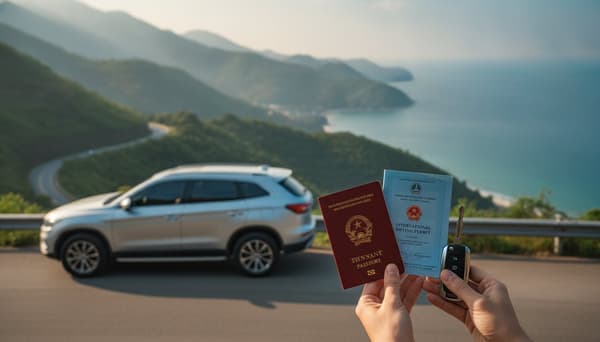
- Bring your passport, your national driving licence and, where it applies, an International Driving Permit, and have the originals with you at pickup.
- Check the vehicle with our staff and keep a signed condition report before you accept the keys.
- Read the price and protection terms before you pay: prices are shown in VND and include VAT, the deposit is refundable, and damage protection is optional.
- Learn the unwritten rules of the road: predictable speed, giving way to larger vehicles, and no alcohol at all.
- Be honest about whether self-drive suits you, and plan your first day to be short.
Table of Contents
Preparing Your Documents
Arriving without the right paperwork is more than a minor oversight: it is a delay that eats into your first day on the road. Many travellers rely on outdated forum advice about what a rental desk will accept, so check the requirements for your own booking before you travel.
The Pickup Checklist
- Passport: the original, with your current Vietnam entry visa or stamp.
- National driving licence: the original, in the name on your booking.
- International Driving Permit (IDP): not required for citizens of ASEAN countries. Rules around licences and permits change, so confirm the current position before you travel.
- Payment method: for the refundable security deposit.
You must be at least 18 years old. Uploading your documents when you book is optional; have the originals with you at pickup, because a missing document can delay the handover. Our guide to vehicles, protection and booking covers the rest of the rental.
Protection and Contract Compliance
Optional damage protection only works as written, so read the terms that apply to your booking before you sign. Neither Collision Damage Waiver nor Full Protection applies to damage caused by driving under the influence, by an unauthorised or unlicensed driver, by use outside the agreed terms, dates or territory, or by a failure to report an incident promptly. Keep a photo of your signed contract on your phone as a backup.
Operational Safety: Checking the Vehicle
Vietnam's tropical climate is hard on machinery, so a vehicle's condition is your first line of defence. Whatever company you rent from, a careful walkaround before you leave is the simplest safety measure there is.
The Pre-Drive Inspection
Walk the car with our staff and photograph every panel, the tyres, the windscreen and the fuel gauge before you sign the handover sheet. Check tyre tread and pressure, test the brakes gently in the car park, and make sure the headlights, indicators and air conditioning work. Record a short walkaround video: it gives both sides an objective record of any scratches or dents that were already there.
If Something Goes Wrong
If you have an accident or a breakdown, stay safe first, then contact us and, where needed, the local police so that the scene is documented. Report any incident promptly: it is a condition of the optional protection packages. Official travel advice, such as the Australian government advice for Vietnam, helps you prepare for local road conditions.
Financial Clarity: Reading a Rental Price
Financial security matters as much as mechanical condition. A safe rental is not found by chasing the smallest number on a listing; it is found through the clearest contract. When a price is stated openly, you avoid awkward negotiations at the end of your trip.
What Our Price Shows
- Prices are shown in VND and include VAT.
- You choose at booking between paying 100% now and paying at pickup.
- The security deposit is between US$500 and US$1,000 depending on the vehicle, taken in VND first. It is refundable: held for 20 to 30 days after you return the car and refunded no later than 30 days after the return, so that traffic-camera fines notified after your trip can still be checked.
- Optional extras and damage protection are added only when you choose them.
- Cancellation is free if you cancel more than 10 days before the scheduled pickup.
Red Flags with Any Rental Company
- Cash-only pressure: if a company refuses digital payments or will not give a formal receipt, you have no paper trail for your deposit.
- Unusually low rates: a rate that looks too good to be true is often offset by cleaning or mileage charges added at return. Ask what the price covers.
- Vague damage logs: if nobody is interested in recording existing scratches, you may be billed for them later.
- A different car at pickup: make sure the model you collect matches the model you booked, and ask for the change in writing if it does not.
If a fine arrives after you have returned your car, we send you the official record and you have 7 days to dispute it. We never charge your card automatically for a fine.
On-Road Safety: Navigating Vietnamese Driving Culture
Driving in Vietnam is an exercise in flow rather than strict lane discipline. Predictability is your greatest asset. If you stop unexpectedly or drive too hesitantly, you become a hazard; keep a steady pace and allow the motorbikes to flow around you like water around a stone. Read the official road safety guidance for foreign visitors before you set out.
The hierarchy of the road is an unwritten rule: size usually decides right of way. Buses, trucks and large vehicles expect smaller ones to give way regardless of signs, so if a long-distance bus pulls into your lane, slow down and let it in. Avoid rural and intercity driving after dark: street lighting is often missing, and unlit vehicles or livestock are common. Plan your legs to finish before sunset.
Essential Local Rules
- The alcohol limit for drivers is 0.00%. Do not drink and drive, even a single drink.
- Carry your original licence, passport and rental documents whenever you drive.
- Respect posted speed limits in towns and on highways.
Communication on the Road
In many countries a horn expresses frustration. In Vietnam a short, light tap is mostly a location signal: I am here, or I am overtaking. Watch for motorbike riders pointing or waving to warn you of a pothole or a sudden turn. A navigation app is useful for national routes, but cross-check its suggestions against the road in front of you.
If you are not comfortable with this kind of traffic, rent the car for the open-road legs of your trip only, and use taxis or ride-hailing inside the busiest city centres. A short first day is a sensible way to settle in.
Is Self-Drive Right for You?
Self-driving is a rewarding way to see Vietnam at your own pace, and it asks for patience, attention and respect for local conditions. Be honest about your own experience. If you have never driven in dense motorbike traffic, build your trip around calmer roads first, keep your first day short, and book the vehicle class that fits the route.
We rent cars for you to drive yourself. Check availability and book your car and read the terms that apply to your dates on the booking page before you pay.
Secure Your Vietnamese Journey
A safe rental starts with matching paperwork, a car you have checked, a price you understand, and realistic expectations of the road. With those in place, the risks facing visitors shrink considerably.
Book your car rental and set out with confidence.
Frequently Asked Questions
What documents do I need to rent a car in Vietnam as a foreigner?
Bring your passport and your national driving licence. An International Driving Permit is also needed, except for citizens of ASEAN countries. You must be at least 18. Uploading documents when you book is optional, but have the originals with you at pickup. Rules can change, so confirm the current position before you travel.
What should I do if I have an accident in Vietnam?
Stay safe first, then contact your rental company and, where needed, the local police so the scene is documented. Report the incident promptly, because prompt reporting is a condition of the optional protection packages. Without a protection package you are liable for damage up to the value of the vehicle.
Do I need to buy damage protection when renting a vehicle in Vietnam?
It is optional at Rocket Car Rentals. Collision Damage Waiver caps your liability at a stated deductible, and Full Protection, which is our own damage waiver and not insurance, gives a zero deductible for covered incidents. Without a package you are liable for damage up to the value of the vehicle. Read the exclusions on your booking confirmation.
Do I need a Vietnamese driving licence to rent a car?
You rent self-drive with your original national driving licence and, unless you are a citizen of an ASEAN country, an International Driving Permit. Rules around licences and permits change, so confirm the current position before you travel.
What should I look for in a rental price?
Ask for a written price that states the VAT treatment, the protection that applies and the deposit. At Rocket Car Rentals, prices are shown in VND and include VAT, the refundable deposit is separate, and optional extras are added only when you choose them. Cleaning fees, fuel terms and mileage limits are worth asking about with any rental company.
Is it safe to drive between cities at night?
We recommend avoiding rural and intercity driving after dark. Many roads lack street lighting, and you may meet unlit vehicles or livestock. Plan your travel legs to finish before sunset.
What should I check on the vehicle before I accept the keys?
Walk the car with our staff and photograph every panel, the tyres and the fuel gauge before you sign the handover sheet. Test the air conditioning, lights and horn. Check that the spare tyre and jack are present. A signed condition report is your strongest protection against a disputed damage claim.
Is self-drive safe for first-time visitors to Vietnam?
It can be demanding at first because of dense traffic and many motorbikes. Many visitors keep their first day short, use taxis or ride-hailing in the busiest city centres, and rent the car for the open road. The alcohol limit for drivers is 0.00%.